

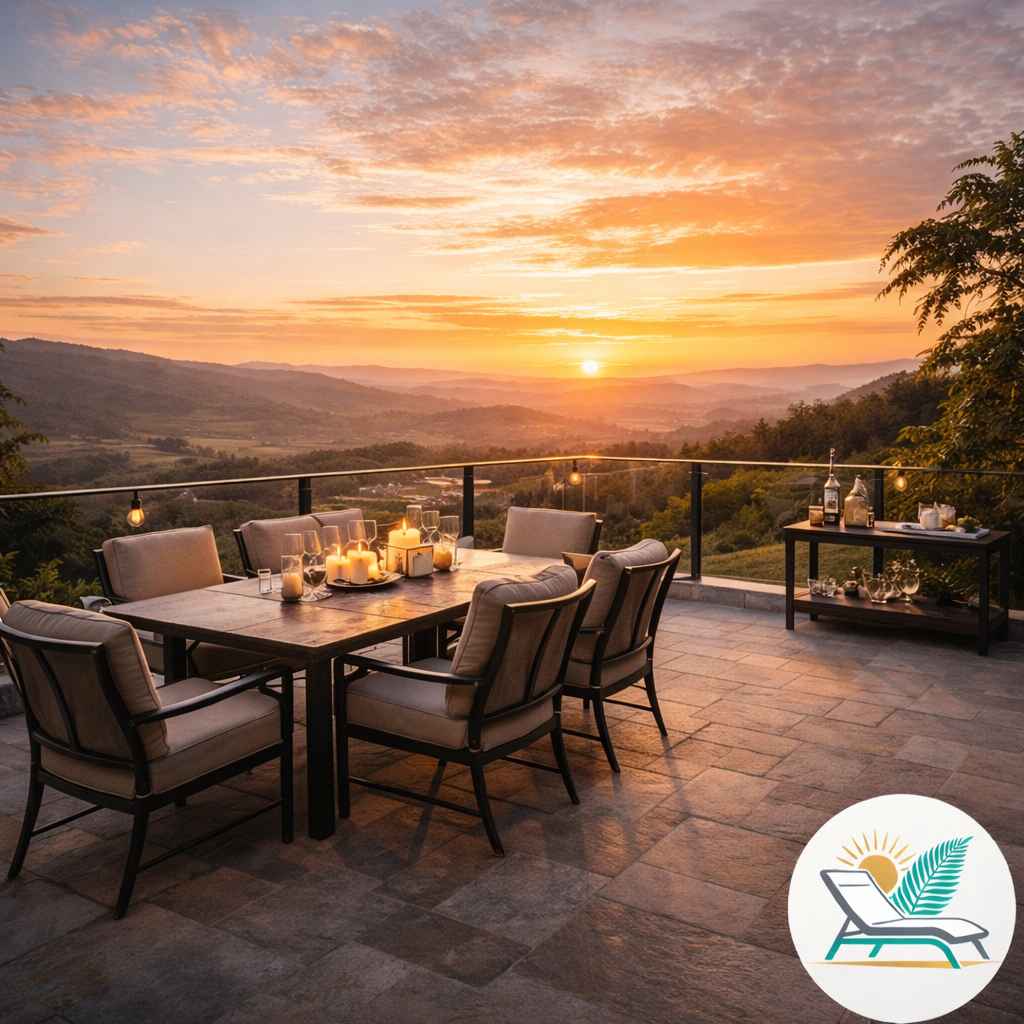


A terrace fails fast when the view is perfect but the seating isn’t. Chairs drift in wind, pathways pinch, and the surface turns slick the first time rain pushes water toward the door. Then the space becomes decorative—look, don’t use. The real decision isn’t “what style.” It’s where the terrace patio ideas start paying rent: sightlines, traffic lanes, and a seating plan that doesn’t collapse the moment four people show up with drinks. Get those wrong and every later purchase feels like a fix, not an upgrade.
Sightline-first seating that protects the view
Terrace patio ideas should start with what your eyes do when you step outside. If the best view is straight ahead, don’t waste that axis on a tall sofa back or bulky planters. Keep the highest pieces—privacy screens, storage benches, tall pots—off the primary view corridor.
A practical constraint shows up immediately: railing height and local safety rules often force a minimum barrier, which already eats some of your view. The failure mode is common—people push seating up against the railing to “get closer,” then discover wind turbulence and uncomfortable exposure. The decision lever is seat height and back profile. Lower lounge chairs, armless slipper chairs, and modular pieces with low backs preserve sightlines while still reading as “real seating,” not temporary furniture.
Terrace patio ideas that work long-term also respect neck angles. If your horizon is high—city rooftops, hills—angle seating slightly away from the railing so people aren’t craning upward. If the horizon is low—water, fields—keep the first row parallel to the edge and place taller pieces behind it, not beside it.
Wind mapping and anchoring that keeps furniture usable
An elevated terrace acts like a wind funnel. Even “mild” days can flip cushions and slide lightweight chairs. Treat wind as a layout input, not a surprise.
Constraint: you may not be able to drill into the surface if it’s a membrane roof terrace or a rented unit. The failure mode is buying pretty, light furniture that becomes annoying, then avoiding the terrace. The decision lever is mass and friction: heavier bases, wider legs, and grippy feet matter more than brand names.
Terrace patio ideas for exposed sites should include at least one windbreak strategy that doesn’t block the view. Slatted screens set perpendicular to the prevailing wind reduce gust force without creating a solid wall. A planter row with dense, low shrubs can calm airflow at knee level where it pushes furniture most. If you can’t add structure, use weighted ottomans that double as anchor points for throws and footrests.
Drainage and slope planning that protects the door line
Elevation doesn’t guarantee good drainage. Terraces often hold water at the threshold, especially when furniture and rugs block flow.
Constraint: the surface slope is usually fixed, and changing it can be expensive or impossible on a roof terrace. The failure mode is subtle—water stains, algae slickness, and swelling at door frames. The decision lever is where you place “water traps”: rugs, big planters, and low storage units.
Terrace patio ideas should keep a clear drainage lane from high point to low point. Don’t place a continuous row of planters across the slope like a dam. Use pot feet or risers so runoff can pass underneath. If you want an outdoor rug, pick one that drains and keep its edge away from the door by a small buffer so puddles don’t sit against the threshold.
Traffic lanes that prevent the “tight corner” problem
A terrace can look spacious until people start moving. The minute someone carries a tray, the corners reveal themselves.
Constraint: terrace depth is often limited, and railings, door swings, or HVAC units steal usable inches. The failure mode is setting furniture based on photo aesthetics, then discovering you can’t pass behind chairs without turning sideways. The decision lever is choosing a primary route and protecting it with spacing, not hope.
Terrace patio ideas that feel easy to use usually reserve a continuous walking lane from the door to the main seating zone. Keep it consistent rather than widening and narrowing. If the terrace is narrow, place seating in an L-shape on the far end and keep the near end clear as a “landing pad” so you’re not stepping into furniture immediately.
Modular seating that scales without looking like spare parts
Elevated views invite gatherings, but fixed seating punishes you when the group size changes. Modular setups handle real life better—if you pick the right modules.
Constraint: storage for extra pieces may be limited, especially in apartments. The failure mode is buying a modular set with too many small pieces that drift apart and feel messy. The decision lever is selecting a core configuration that looks finished with only two or three modules, then adding one “swing piece” like a compact armless chair.
Terrace patio ideas that scale well use a strong anchor—either a low sectional or a pair of deep lounge chairs—then add flexible seating that doesn’t require perfect alignment. Stools, cube ottomans, and lightweight accent chairs can rotate from view-facing to conversation-facing without turning your terrace into a furniture puzzle.
Dining layouts that don’t steal the view
A terrace dining set can block sightlines more than any other element. The table height and chair backs become a visual fence.
Constraint: you still need comfortable eating height, and umbrellas can conflict with wind and overhead lines. The failure mode is picking a large rectangular table that dominates the view edge and forces everyone to sit with backs to the scenery. The decision lever is table shape and orientation.
Terrace patio ideas for dining usually work best with a round or small oval table placed slightly off-center, angled so two seats face the view and two face inward. If the terrace is long, consider a narrow console-style table against an interior wall and pull chairs only when needed. That keeps the view edge clean and reduces daily clutter.
Lighting that supports elevation without glare
Elevation changes lighting needs. City terraces fight glare from neighboring windows; hillside terraces need safe edges without turning the view into a stage.
Constraint: power outlets may be limited, and permanent fixtures may be restricted. The failure mode is over-lighting—bright strings that reflect off glass doors, killing the night view. The decision lever is layered, low-glare lighting placed at knee and waist height.
Terrace patio ideas that feel polished use a dim, warm perimeter glow and focused task light near seating. Keep bright sources behind the sitter, not in their line of sight. If you use string lights, run them along an interior wall line or overhead only where they don’t mirror in the glass. On a windy terrace, avoid tall, tippy lanterns; choose heavier bases or wall-mounted options if allowed.
Privacy choices that don’t ruin the open feeling
Terraces often feel exposed even when the view is the selling point. The trick is blocking angles, not building walls.
Constraint: building rules may limit screen height or attachment methods. The failure mode is adding solid panels that stop wind and view, making the terrace feel boxed in. The decision lever is selecting partial privacy: slats, angled screens, and greenery that filters rather than blocks.
Terrace patio ideas should identify the “problem angle”—usually from a neighbor’s window or balcony—then shield only that slice. A narrow screen set at an angle can cut the sightline without covering your horizon. Planting can do the same if you choose species that handle exposure and don’t become brittle in wind.
Materials and finishes that stay stable above ground
Elevated terraces punish cheap finishes. UV is harsher, wind-driven grit abrades surfaces, and moisture cycles are more extreme.
Constraint: weight limits can affect what you can place on a roof terrace, including stone planters and heavy decking systems. The failure mode is warping, rust, and slippery surfaces that look worn in one season. The decision lever is picking materials that match exposure: powder-coated metals, exterior-rated woods, and textured surfaces underfoot.
Terrace patio ideas for flooring should prioritize traction and drainage. Smooth tile can be beautiful and dangerous when damp. Composite decking can solve traction but may heat up in direct sun. Choose finishes based on where the terrace gets used—door zone, seating zone, edge zone—not as one uniform decision.
A lived-in terrace plan that survives real gatherings
Here’s where terrace patio ideas prove themselves: a Friday evening, six people, wind picking up, someone needs a phone charger, and two guests want the view while the others want conversation.
Constraint: your space might only allow one true “primary” zone. The failure mode is trying to do everything—dining, lounging, sunbathing—then doing none of it well. The decision lever is declaring a priority and supporting it with one secondary function, not three.
Picture a terrace with a sliding door at center, railing facing a skyline, and a narrow depth. The friction points show up fast: chairs creep toward the edge, and the walkway disappears when someone pulls out a dining chair. Fix it with a view-facing lounge pair near the edge, anchored by a low, heavy coffee table. Keep a clear lane from the door along one side. Add two cube ottomans that tuck under a console when not in use. Dining becomes a small round table that can shift inward on windy nights. That’s a terrace seating plan that doesn’t break the moment it gets used.
Conclusion
Terrace patio ideas aren’t about filling an elevated platform with attractive pieces. They’re about protecting the few variables that make elevation worth paying for: the view, the comfort, and the ease of moving through the space without negotiating furniture. Start with sightlines and wind, because they dictate what furniture types will actually behave. Then lock in traffic lanes and drainage, because those failures feel expensive and constant. “Good” looks like this: you can step outside with a drink, sit down without adjusting three items, keep your eyes on the horizon, and host without rearranging the terrace like a stage set. Your first move is simple—mark the view corridor and the walking lane, then place seating only after those two are non-negotiable. The failure to avoid is buying for photos instead of conditions; elevation punishes that fast.
How do terrace patio ideas keep the view open while adding comfort?
Use low-back seating near the railing, keep tall items off the main sightline, and place bulkier pieces behind the primary viewing axis.
What terrace patio ideas work best for windy elevated spaces?
Choose heavier furniture, add a slatted windbreak perpendicular to prevailing wind, and use weighted ottomans to stop cushions and chairs from drifting.
How much walking space should a terrace seating plan reserve?
Keep a consistent clear lane from the door to the seating zone; narrow terraces need a protected side route so traffic doesn’t cut through chairs.
Where should dining go in terrace patio ideas without blocking the horizon?
Place a small round or oval table slightly inward and off-center so chair backs don’t form a wall along the view edge.
What terrace patio ideas help with drainage near doors?
Leave a buffer at the threshold, avoid rugs that trap water, and don’t line planters across the slope where they can dam runoff.
How can terrace patio ideas add privacy without losing openness?
Block the neighbor angle with angled slats or filtered greenery, not solid panels; target the sightline slice that causes exposure.
What seating plan works when a terrace is long and narrow?
Anchor an L-shaped lounge zone at the far end, keep one side as a continuous walkway, and use tuck-away stools for extra guests.
Which materials hold up best in terrace patio ideas with strong sun and grit?
Use exterior-rated, textured flooring, powder-coated metals, and finishes that resist UV and abrasion; avoid slick tiles in traffic zones.
How do terrace patio ideas handle lighting without ruining night views?
Layer low-glare lights at knee height, keep bright sources behind seating, and avoid strings that reflect in glass doors.
What’s the biggest mistake with elevated terrace patio ideas?
Buying lightweight, tall-back furniture that shifts in wind and blocks sightlines, then compensating with clutter instead of fixing the plan.
How can a terrace seating plan scale from two people to six?
Build around a stable lounge pair or low sectional, then add two movable ottomans or armless chairs that tuck away when not needed.
What’s the first step before buying anything for terrace patio ideas?
Map the view corridor, wind direction, and walking lane from the door; lock those in, then choose seating sizes that fit without compromise.