

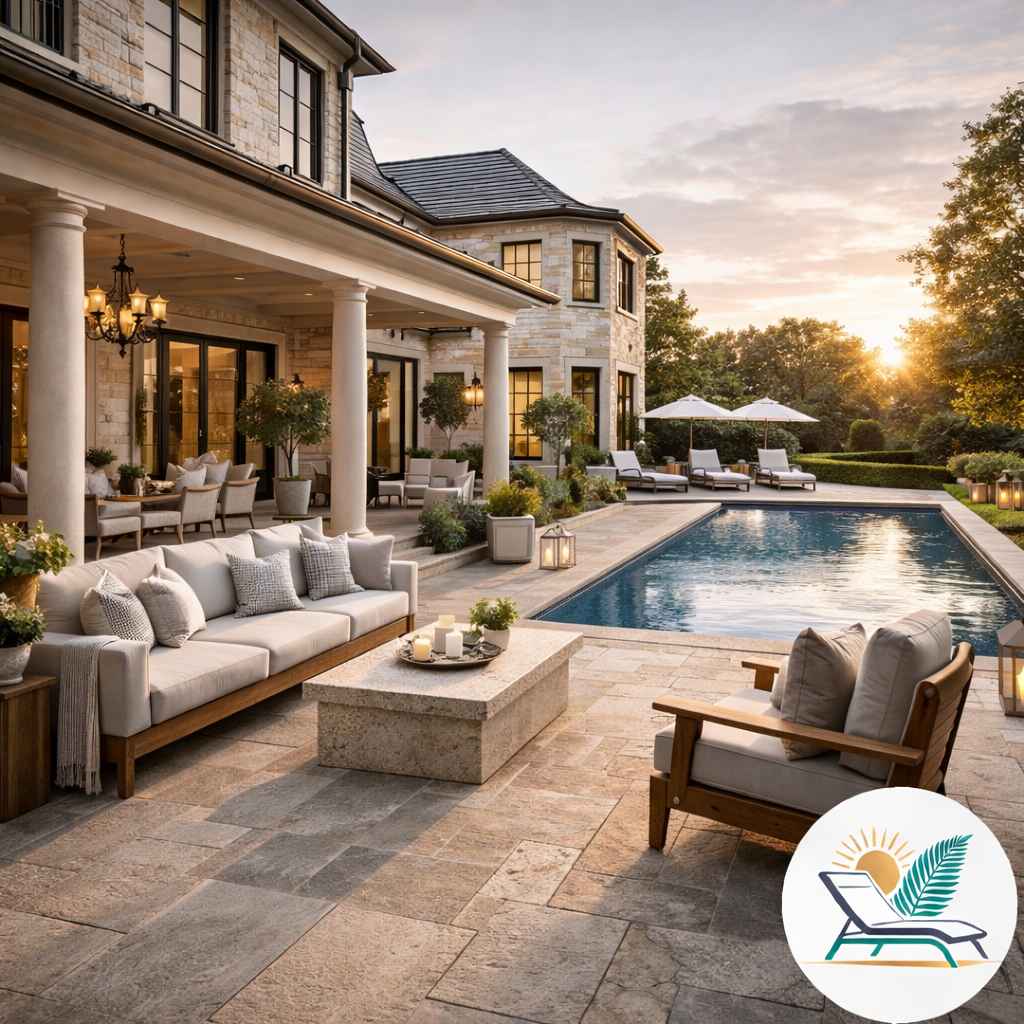


A luxury patio can fail quietly. Not in year one—later, when grout darkens, steel spots, timber cups, and the “premium” look starts reading like a rushed remodel. The expensive part isn’t the material; it’s the redo, the mismatch, the repairs that never blend back in. Luxury home patio ideas only work when premium materials meet real conditions: heat, shade lines, salt air, standing water, kids, grills, furniture legs, and daily foot traffic. The decision isn’t “what looks best.” It’s which elegant finishes will still look intentional after two winters, three summers, and a few hard parties.
Large-Format Stone That Stays Crisp Under Real Use
Luxury home patio ideas often start with large-format stone because it reads calm and expensive fast. The tradeoff is unforgiving geometry: a tiny slope error turns into puddles that leave mineral rings, and wide slabs show lippage more than small pavers.
Your practical constraint is the substrate—stone needs a base that won’t move. If the installer rushes compaction or skips proper drainage design, the failure mode arrives as rocking corners, cracked edges, and stained joints that refuse to clean. The decision lever is thickness and setting method: choose stone rated for exterior load, then match it with a proper mortar bed or pedestal system depending on your climate and access to below-deck drainage. One clean line of stone only looks “luxury” if the water has somewhere to go.
Porcelain Pavers for the “Always New” Look Without the Fuss
Porcelain pavers deliver the sharpest finish with the least visual aging, which is why they keep showing up in luxury home patio ideas. Still, they punish sloppy prep. The constraint is layout planning: tight joints, consistent cuts, and correct edge details take time and a saw that won’t chip.
The common failure mode is a patio that sounds hollow, shifts at corners, or turns slick because the wrong surface rating was chosen for wet zones. Your decision lever is choosing exterior-grade, textured porcelain and insisting on a system that fits your site—pedestals for roof decks, a bonded system for stable slabs, or sand-set only when the base is engineered correctly. Done right, porcelain makes spills, grease, and pollen feel like minor inconveniences instead of weekend projects.
Natural Wood That Reads Warm Without Becoming High Maintenance
If you want a luxury patio that feels lived-in, wood does it. But wood doesn’t forgive neglect. The constraint is exposure: full sun and wind dry boards fast, while shade and planters hold moisture and invite mildew. The failure mode is predictable—cupping, checking, splinters, and a patchwork of fading where furniture sits.
The decision lever is species and finish schedule. Select a stable hardwood or a high-quality modified wood product, then commit to a maintenance rhythm that matches your tolerance for work. Luxury home patio ideas with wood succeed when you design for drainage under planters, avoid trapping water at seams, and accept that “elegant finishes” include the discipline of care.
Metal Detailing That Adds Precision Without Corrosion Surprises
Luxury home patio ideas often lean on thin metal lines—edging, trim, pergola brackets, stair nosings—because they sharpen the whole composition. The constraint is environment: coastal air, pool chemistry, and winter salt destroy the wrong metal quickly.
The failure mode shows up as tea-colored streaks on stone, bubbling powder coat, and fasteners that seize or snap when you try to tighten them later. The decision lever is alloy choice and separation details. Use the right grade stainless where it matters, isolate dissimilar metals to reduce galvanic corrosion, and avoid cutting corners on fasteners. Metal can look “premium” for a decade, or it can stain your entire patio in a single season.
Glass Railings and Wind Screens That Don’t Turn Into Fingerprint Walls
Glass makes a patio feel larger and more architectural, which is why it sits comfortably inside luxury home patio ideas for terraces and elevated yards. The constraint is cleaning and wind load. A beautiful panel becomes a fingerprint wall if the patio is used the way a luxury patio should be used—often.
The failure mode is twofold: racking from poor anchoring and relentless smudging because the layout pushes people to grab the glass as they walk by. The decision lever is placement and hardware quality. Use top rails where hands naturally land, choose tempered/laminated assemblies appropriate to code, and plan access for cleaning so “elegant finishes” don’t become a weekly burden.
Concrete Finishes That Look Custom, Not Commercial
Concrete can be luxury when it’s treated like a finish, not just a slab. The constraint is timing—pours and cures happen on weather’s schedule, not yours. The failure mode is the classic trio: hairline cracks telegraphing through stains, blotchy color from uneven curing, and surfaces that chip at edges because the mix and reinforcement weren’t matched to freeze-thaw conditions.
The decision lever is control joints and finishing method. Decide early where joints go so they align with furniture zones and sightlines. Luxury home patio ideas using concrete work best when the “premium” part is precision: crisp edges, deliberate joint layout, and a sealant plan that fits your climate.
Outdoor Tile That Holds Up Around Heat, Water, and Heavy Furniture
Tile looks sharp on day one and makes patios feel like open-air rooms. But outdoor tile is a different animal than indoor. The constraint is movement: temperature swings expand and contract surfaces, and water finds weaknesses in grout and membranes. The failure mode is loose tiles, cracking lines at corners, and grout that turns dark where it stays damp. The decision lever is the assembly: exterior-rated tile, a proven waterproofing layer, and movement joints placed where the patio actually flexes. Luxury home patio ideas using tile succeed when you treat it like a system, not a surface.
Integrated Lighting That Feels Quiet, Not Like a Showroom
A luxury patio without lighting is a half-finished space. The constraint is wiring routes and transformer placement—especially if you don’t want visible conduits or awkward fixtures. The failure mode is glare: lights aimed wrong, too bright, or too uniform so the patio loses depth at night. Another failure mode is maintenance pain—fixtures buried behind planters or under steps with no access. The decision lever is layering: step lights for safety, low uplights for texture, and warm, dimmable sources where people sit. Luxury home patio ideas become elegant finishes after dark when lighting is treated as architecture, not decoration.
Outdoor Kitchen Surfaces That Stay Clean and Don’t Crack
Outdoor kitchens sell the “luxury” promise quickly, then punish shortcuts. The constraint is heat and exposure: grills throw grease, sun bakes sealants, and winter can split poorly supported countertops. The failure mode is staining that never fully lifts, or cracks where overhangs weren’t reinforced. The decision lever is surface selection and support: choose stone or sintered surfaces that handle heat, detail drip edges so runoff doesn’t stain faces, and design storage so doors don’t warp. Luxury home patio ideas with cooking zones stay premium when you treat the kitchen like a working tool, not a display piece.
Furniture and Soft Goods That Match Premium Materials Instead of Fighting Them
Even perfect stone and metal can look cheap next to the wrong furniture. The constraint is durability: sun destroys fabrics, and cheap frames loosen at joints after one season. The failure mode is visual—cushions sag, seams split, and colors fade so the patio stops reading “luxury” even if the hardscape is flawless. The decision lever is proportion and fabric grade. Match furniture scale to the patio’s geometry, choose performance textiles that hold color, and keep a storage plan so soft goods aren’t sacrificed to weather. Luxury home patio ideas become elegant finishes when the comfort layer is treated with the same seriousness as the stone.
Conclusion
Luxury home patio ideas don’t succeed on taste alone. They succeed when premium materials are paired with honest constraints—drainage, exposure, cleaning tolerance, and the way the space gets used on a normal week. Your first move is to choose the surface system and drainage strategy before you fall in love with a finish sample. Get that wrong and every elegant finish becomes a maintenance story or a repair bill.
The failure to avoid is mixing “premium” elements that age differently: one stains, one fades, one corrodes, and the patio starts looking patched together. “Good” looks like consistency after time—tight joints that stay clean, metals that don’t bleed, wood that weathers evenly, lighting that flatters without glare, and a layout that feels calm even when the patio is full.
How do luxury home patio ideas stay low maintenance?
Pick exterior-rated surfaces, detail drainage early, and avoid finishes that require constant sealing. Most maintenance pain comes from water retention and mismatched materials.
Which premium materials hold up best in freeze-thaw climates?
Dense stone, exterior porcelain, and properly detailed concrete systems perform well. Failures usually come from poor base prep, trapped moisture, and weak joint planning.
Are porcelain pavers truly “luxury” or just practical?
They can be both. The luxury comes from precise layout, clean cuts, and correct edge detailing; the practical benefit is stain resistance and consistent color.
What’s the biggest mistake with natural stone patios?
Ignoring slope and drainage. Standing water stains stone, darkens joints, and accelerates surface wear, making expensive material look tired fast.
How do elegant finishes handle pool areas?
Choose slip-resistant surfaces and corrosion-safe metals. Pool chemistry and wet feet punish soft stone, cheap hardware, and coatings that aren’t rated for exposure.
Is wood decking worth it for a luxury patio?
Yes, if you accept upkeep. Wood looks premium when it’s detailed well, ventilated properly, and maintained on schedule; neglect turns it into splintered, patchy boards.
What metal should be used outdoors to avoid rust stains?
Use appropriate-grade stainless or aluminum where corrosion risk is high, and avoid mixed metals that react together. Rust streaks often start at fasteners.
How can lighting feel high-end without looking overdone?
Use layered, warm, dimmable light with controlled glare. The goal is depth and comfort, not uniform brightness that flattens the space.
What makes an outdoor kitchen finish look premium long term?
Heat-tolerant, stain-resistant surfaces with solid support and clean detailing. Poor overhang support and weak sealants cause cracks and permanent discoloration.
How do I keep a glass railing from being a cleaning headache?
Add a top rail where hands land and keep traffic paths off the glass. Plan easy access for wipe-downs and avoid layouts that force contact.
What’s the smartest “first upgrade” for luxury home patio ideas?
Upgrade the surface system and drainage, then add lighting. A flawless base makes every premium material look better and prevents expensive redo work.
How do I make premium materials feel cohesive together?
Limit the palette, repeat one or two finishes across elements, and match aging patterns. Cohesion comes from consistency, not from adding more materials.