

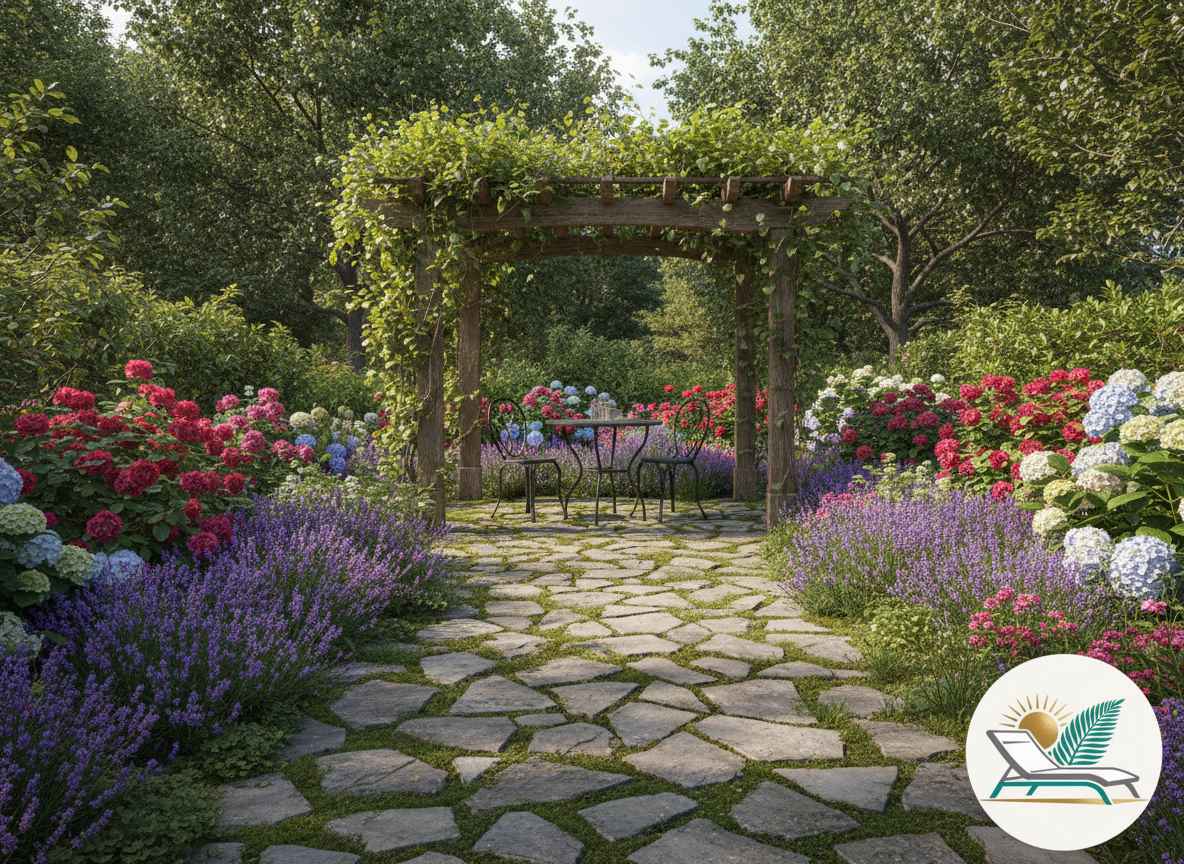


A garden patio fails quietly at first. A wobble underfoot. Mud dragged into the house. A chair leg sinking after rain. Then the fixes start—bags of gravel, another “temporary” stepping stone, plants moved again because the space never quite works. Garden patio ideas look effortless online because the hard part isn’t the look. It’s the decisions that prevent cracking, slipping, staining, and flowerbeds that swallow the seating area by July. Garden patio ideas that last start with one question: do you want a patio you admire, or one you actually use without thinking about it?
Choose stone by foot traffic, not by color
Garden patio ideas often begin with a stone you like, then end with a surface you avoid. The main constraint is use: a path to the shed behaves differently than a dining terrace where chairs scrape daily. Softer stones can pit or spall under repeated dragging, and very smooth finishes can turn slick when algae arrives.
A common failure mode is buying thin, decorative pieces that shift because the base wasn’t designed for real loads. The patio looks “settled” for a month, then joints open, edges chip, and weeds move in. The decision lever is thickness and finish. For seating zones, prioritize consistent thickness and a finish that has tooth—honed can be elegant, but tumbled or lightly textured is forgiving under wet shoes. For garden patio ideas that feel grounded, pick a stone that tolerates your habits, not your best intentions.
Build a base that matches your soil and weather
Stone doesn’t fail first. The base does. The constraint is invisible: soil type, drainage, and freeze-thaw cycles if you have them. Clay holds water; sand drains fast but can shift; mixed soils settle unpredictably.
The failure mode is the “looks level” installation—stone placed over a shallow layer of sand, no compacted sub-base, and no edge restraint. After a few heavy rains, the patio cups and puddles, and the floral borders start eroding into the joints. The decision lever is depth and compaction. If you want garden patio ideas that survive seasons, treat the base like the real structure: compacted aggregate in lifts, clean bedding layer, and hard edging that stops lateral creep. You can change the flowers later. You won’t redo the base without paying twice.
Set joint strategy before you plant a single border
Joints determine how much maintenance you’ve signed up for. The constraint is time: weeding and re-sanding are either a hobby or a headache. Wide joints invite plantable seams; tight joints demand precision; both have tradeoffs.
The failure mode is mixing styles—tight joints in a shady garden where moss thrives, plus a soft joint fill that washes out. Or wide joints with no plan, then panic-planting creeping thyme that can’t handle foot traffic. The decision lever is joint fill choice. For heavy-use patios, stable jointing material reduces shifting and weed pressure. For softer garden patio ideas, intentional “green joints” work when you commit: sun exposure, irrigation control, and plants selected for stepping tolerance. Decide joints first, because they dictate everything from stone sizing to floral edging.
Shape the patio with clear edges that defend the flowers
A garden patio loses definition when borders blur. The constraint is growth: flowers don’t respect your neat sketch, especially in rich soil near a watered seating zone. Without a firm edge, plants creep, mulch spills, and the stone line disappears.
The failure mode is relying on mulch alone to separate patio from planting bed. It looks tidy for a week, then wind and foot traffic scatter it across stone, staining light surfaces and feeding moss. The decision lever is edge architecture. Steel edging, stone curbs, or a low retaining line creates a hard boundary that keeps the patio readable. Garden patio ideas feel expensive when the lines stay crisp. Your flowers can be loose and romantic; your edges can’t.
Use floral layers to control sightlines and mess
Flowers aren’t just decoration; they’re spatial tools. The constraint is scale—too tall near seating feels closed in, too low everywhere looks flat, and too much fragrance in a tight corner can become cloying in heat.
The failure mode is planting for peak bloom only. The patio looks great for three weeks, then becomes leggy stems, deadheading guilt, and windblown petals on cushions. The decision lever is layering by role: low spillers near the stone to soften edges, mid-height plants to frame without blocking, and taller anchors placed where they won’t drop debris onto the main walking route. Garden patio ideas that feel calm rely on plants that behave, not just bloom.
Manage water so stone stays clean and florals stay upright
Water is the quiet dictator of garden patio ideas. The constraint is runoff: patios shed water, and flowerbeds catch it. If the patio slopes wrong, you get puddles; if the bed takes the brunt, you get eroded soil and floppy perennials.
The failure mode is letting downspouts or roof drip lines aim toward the patio edge. You end up with algae, stained joints, and a soggy planting strip that rots roots. The decision lever is redirecting flow early: add a gentle slope away from seating, capture roof water before it hits the patio, and avoid placing thirsty plants where runoff turns them into a swamp. Stone stays brighter when water exits quickly. Flowers stand better when their soil isn’t constantly collapsing.
Choose a color palette that doesn’t fight the stone
Natural stone already sets the tone. The constraint is undertone: warm stones make cool flowers look harsh; cool stones can make warm reds feel muddy. Garden patio ideas go wrong when every plant competes for attention.
The failure mode is buying flowers in whatever looks good at the nursery. Under garden light, you get a patchwork that makes the patio feel smaller and noisier. The decision lever is limiting your palette. Pick one dominant floral color family, one accent, and let foliage do the heavy lifting. Silvery leaves can bridge warm and cool stone. Deep greens calm busy patterns. When the palette is controlled, stone texture becomes the star instead of the background.
Add lighting that respects plants and highlights texture
Lighting should make you use the patio more, not just photograph it. The constraint is placement: lights near blooms can attract insects to seating, and bright fixtures can flatten the natural texture you paid for in stone.
The failure mode is overhead glare—one harsh source that throws shadows awkwardly and makes flowers look tired. The decision lever is low, angled light. Small path lights or concealed uplights grazing the stone edge make joints and textures visible and keep the patio safe. Aim a few lights at structural plants, not every blossom. Garden patio ideas feel intentional at night when you light the stone plane and let florals glow in pockets, not everywhere at once.
Plan furniture around movement, not maximum seating
A patio that’s “full” is often unusable. The constraint is circulation: you need lanes for carrying food, opening doors, and walking without brushing wet foliage. Flowers near chairs also take a beating—snapped stems, compacted roots, constant reshaping.
The failure mode is placing furniture first, then forcing planting into leftover corners. Those corners become dead zones: too dry, too shaded, or constantly stepped on. The decision lever is a movement-first layout. Leave a clear path from house to seating to garden access points. Place planters or borders where they won’t be clipped by chair legs. Garden patio ideas succeed when the patio feels like a room with exits, not a display with obstacles.
Scenario: a weekend patio that stops failing by midsummer
Picture a small back garden with a stone patio tucked near the kitchen door. Two kids cut across the lawn to the trampoline, and the dog takes the same shortcut after rain. The owner wants garden patio ideas that feel lush—flowers everywhere—yet the space keeps turning into mud by June.
Two friction points show up immediately. First, the stepping stones are too far apart, so everyone steps on the soil between them and compacts it into slick clay. Second, the flowerbed edging is soft mulch, which migrates onto the stone and stains it.
The fix isn’t another plant haul. The constraint is time: it needs a durable solution that doesn’t demand weekly repairs. They widen the stone landing by the door to catch traffic, add proper edge restraint, and tighten the path spacing where people actually walk. For florals, they stop planting right at the chair line and instead create a defined border with tougher plants near the edges and showier blooms set back. The decision lever is accepting that structure comes first: stone placement and edges dictate whether the flowers will thrive or be trampled. The patio becomes a space they use without watching their feet.
Conclusion
Garden patio ideas pay off when you stop chasing “pretty” and start defending the space from failure. Natural stone gives permanence, but only if the base, joints, and edges are built to match your soil and your traffic. Floral designs add softness, but only if you place plants as part of a system—layers that frame, not smother; colors that complement, not compete; water that drains, not stains.
The first move is simple: decide what breaks your patio today. Is it shifting stones, weeds in joints, muddy borders, or plants that collapse into the walking lane? Fix that one failure before you add anything decorative. “Good” looks like a surface that stays level, a border that holds its line, and flowers that look intentional even when they aren’t in peak bloom. If your patio feels easy to live with on a wet Tuesday, it will look impressive on a sunny Saturday.
How do I pick the best stone for a garden patio?
Choose stone based on traffic and slip risk. Textured, consistent-thickness pieces handle chairs and wet shoes better than thin decorative slabs.
What base depth prevents natural stone from shifting?
A compacted aggregate sub-base sized to your soil and climate matters most. Shallow, uncompacted layers settle and open joints after heavy rain.
Should I use wide joints or tight joints between stones?
Wide joints suit plantable seams but need sun and tough groundcovers. Tight joints reduce weeds but demand precise laying and stable joint fill.
How can I keep flowers from invading the patio edge?
Install a firm edge like steel, curb stone, or set edging blocks. Without restraint, mulch and roots creep onto stone and blur lines.
What flowers work best near high-traffic patio borders?
Use resilient plants with flexible stems and dense roots near edges. Keep delicate bloomers slightly back to avoid snapping and soil compaction.
How do I stop algae and staining on patio stone?
Control water first: slope correctly, redirect downspouts, and avoid constant runoff across joints. Shade plus moisture invites algae and discoloration.
How do I make stone and flowers match visually?
Match flower colors to the stone undertone. Limit to one main color family and one accent, using foliage to connect everything calmly.
Where should patio lighting go in a garden setting?
Use low, angled light grazing stone edges and highlighting key plants. Avoid harsh overhead glare that flattens texture and attracts insects to seating.
How much space should I leave for walking around furniture?
Leave clear circulation lanes so chairs slide without hitting plants. Tight layouts force stepping into beds, breaking stems and compacting roots.
Can I mix different natural stones in one patio?
Yes, but keep finishes compatible and limit contrast. Too many textures and tones look chaotic and make the garden patio ideas feel unplanned.
What’s the easiest upgrade when the patio feels messy?
Define edges and joints. A crisp border plus stable jointing cleans up the look fast and reduces weed pressure and mulch spill.
How do I keep the patio usable through midsummer growth?
Plant in layers with a “no-grow” buffer near seating and paths. Choose plants that hold shape, and place exuberant spreaders farther back.