

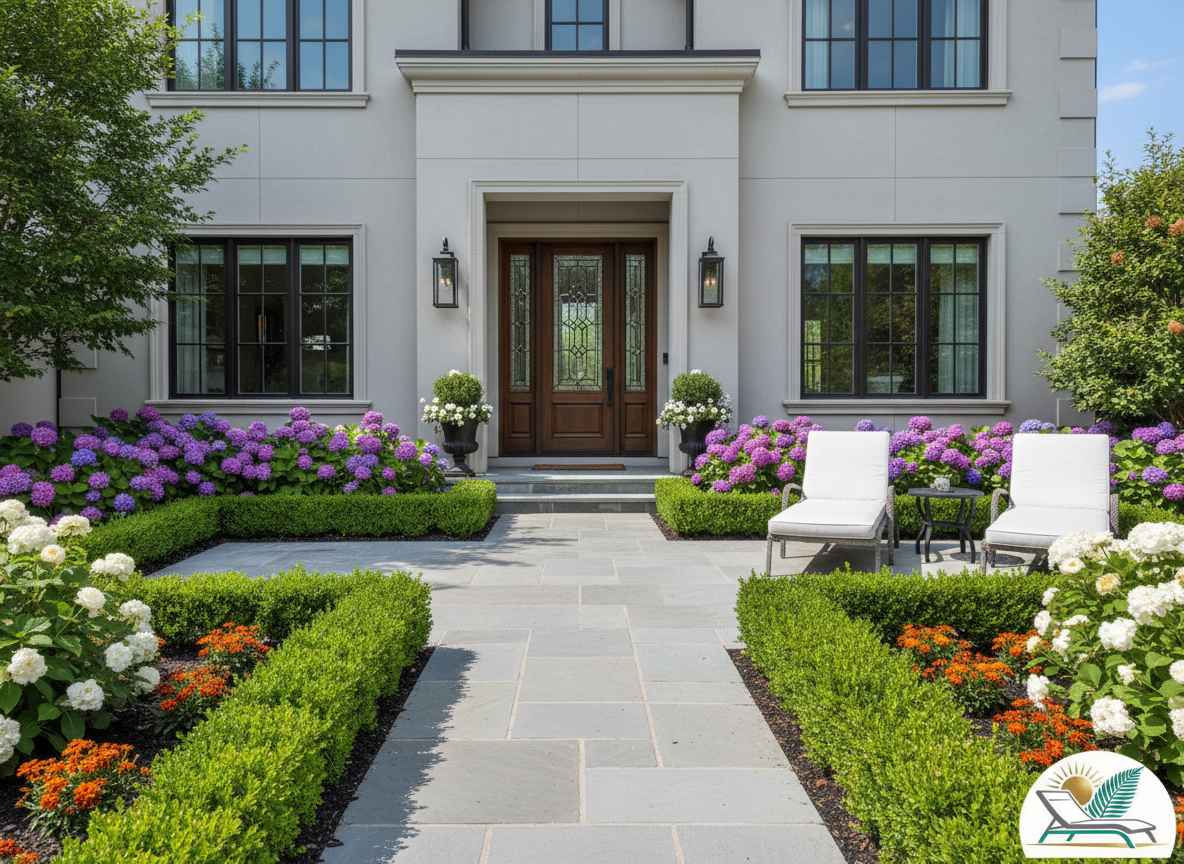


A front yard patio can raise curb appeal or quietly drag it down. Get the scale wrong and it looks like leftover paving stuck near the door. Choose the wrong surface and it stains, weeds creep in, and the first winter makes it look tired. Neighbors don’t say anything—your place just starts to read as “unfinished.” Front yard patio ideas work when they solve one hard problem: how to create a welcome zone that feels planned from the sidewalk, not improvised from the backyard. The decision is rarely “patio or no patio.” It’s whether you’re building a small outdoor room that fits the house, the street, and the way people actually arrive.
Set the patio size by sidewalk sightlines, not square footage
Front yard patio ideas fail when the patio is sized from the inside out. People measure what fits near the entry, then realize later that the sidewalk view is what matters. From the street, a patio reads as a shape, not a seating plan. Too small and it looks like a doormat made of stone. Too large and the house loses its front yard breathing room.
A practical constraint shows up fast: front setbacks and property lines. Even when you have space, the “right” footprint depends on what the facade can visually carry. A narrow bungalow can look top-heavy with a wide hardscape pad; a taller home can handle more patio mass if it’s broken into zones.
The failure mode is a flat rectangle shoved against the porch with no edge logic. It becomes a stage with nowhere to land—chairs feel exposed, and you stop using it. The decision lever is the patio’s outer edge. Push that edge to align with a strong architectural element (a window bay, a porch post line, the start of a walkway), then taper or notch the rest to keep the yard feeling open.
Front yard patio ideas should read intentional in one glance: one dominant line, one secondary adjustment, no random corners.
Choose a layout that respects arrival paths and door swing reality
Front yard patio ideas aren’t patio-first; they’re arrival-first. People step out of cars with bags, kids, or a dog pulling toward the door. If the patio interrupts that path, it turns into a daily irritation. The patio needs to support movement, not compete with it.
The practical constraint is the door swing and landing depth. Many entry doors need clear space to open fully without clipping a chair leg or a planter. If you have a storm door, the needed clearance grows. A tight entry makes the patio feel cluttered even when it’s “minimal.”
The failure mode is placing seating where traffic wants to flow. You end up walking around furniture every day, so you shove it aside, and the patio becomes a storage zone. The decision lever is a clean, obvious corridor from sidewalk to door—then you build the sitting area off that corridor like a bay, not in the middle of it.
Front yard patio ideas work best when the movement line is boring. Let it be. Save personality for the seating pocket.
Pick materials that age attractively in street-level scrutiny
In the front yard, every stain and crack performs for the neighborhood. Front yard patio ideas should prioritize surfaces that look better with a little wear, not worse. That usually means textured pavers, tumbled stone, or broom-finished concrete with control joints that look deliberate.
The practical constraint is weather plus maintenance tolerance. If your winters are wet and freeze-thaw is a factor, porous stone can spall and smooth concrete can flake at edges. If you hate sealing, avoid materials that demand it to look presentable.
The failure mode is choosing a trendy surface that photographs well on day one and looks blotchy by month six—especially near planters, sprinklers, or where people set drinks. The decision lever is finish and color range. Mixed-tone pavers hide small stains. Matte finishes hide scuffs. Slight texture reduces slip risk and disguises debris until you can sweep.
Front yard patio ideas should assume a real life: muddy shoes, leaf tannins, spilled coffee, and one neglected week in autumn.
Build edges that keep mulch, gravel, and weeds from taking over
Edges are the quiet difference between “designed” and “messy.” Front yard patio ideas often focus on the center surface and forget that the border is what stays in your peripheral vision every day.
The practical constraint is time. If you don’t want to spend weekends trimming, the edge detail needs to resist creep. Mulch migrates. Gravel escapes. Turf tries to reclaim the patio line. Without a barrier, it becomes constant correction.
The failure mode is a flush patio edge sitting directly against soil. It looks clean for a month, then the seam turns into a weed nursery and the patio starts to sink unevenly as soil washes away. The decision lever is a physical stop: a soldier course of pavers, a steel edging strip, a stone curb, or a slight grade change that defines “hard” versus “soft.”
Front yard patio ideas stay sharp when the border does real work—holding material in place and giving your eye a clean outline.
Create privacy without turning the front yard into a fortress
Front yard patio ideas need a privacy strategy, but the front yard isn’t a backyard. A six-foot wall can feel hostile, and it can trigger permitting headaches. Privacy in front is more about soft screening and angles than total blockage.
The practical constraint is local rules and neighborhood norms. Many areas restrict fence height in the front yard. Even when allowed, tall barriers can annoy neighbors or make your own place feel boxed in.
The failure mode is over-screening: you get privacy but lose curb appeal because the front looks closed, dark, and heavy. The decision lever is layered filtering. Use a low wall or hedge at knee height to define the patio, then add taller but airy elements—ornamental grasses, a small multi-stem tree, a slatted panel with gaps—placed where the sightline matters most.
Front yard patio ideas that feel welcoming usually let the house stay visible while the seating zone feels tucked.
Use lighting to signal “welcome” instead of “security flood”
Lighting is where front yard patio ideas can go classy or cheap fast. Bright white glare makes everything feel like a parking lot. Warm, low lighting makes the patio read as a place people actually sit.
The practical constraint is wiring and placement. If you don’t want trenching, you’ll be limited to solar, plug-in, or low-voltage systems with careful routing. Poorly placed lights create shadows in the wrong spots—especially on steps.
The failure mode is a single harsh fixture by the door doing all the work. It flattens the facade and makes the patio feel exposed. The decision lever is layering: one soft entry light, one or two path-level points to guide feet, and one gentle accent on a focal plant or texture. Keep the color temperature warm so stone and wood don’t look gray.
Front yard patio ideas should make the house look calm at night, not defensive.
Select furniture that reads tidy from the street and survives weather
Front yard patio ideas often die at the furniture stage. People buy bulky sets meant for big back patios, then cram them into a front space. From the sidewalk, it looks like a storage display.
The practical constraint is exposure—sun, wind, and public visibility. Cushions fade. Lightweight chairs blow around. Anything that looks slightly rumpled looks worse out front because it’s always on display.
The failure mode is overfurnishing. Two chairs, a small table, and one well-chosen accessory can look better than a full set squeezed in. The decision lever is scale and silhouette. Pick pieces with slimmer frames, hidden storage, or stackability. Choose fabrics that don’t show dirt easily and that can be brought in fast when weather turns.
Front yard patio ideas succeed when the setup looks intentional even when nobody is sitting there.
Add planting that frames the patio and hides the hardscape seams
Plants are the softener that makes front yard patio ideas feel like they belong. Without them, the patio can look like a patch of hard surface pasted onto the lawn.
The practical constraint is irrigation and sun pattern. Front yards often get harsher sun and more reflected heat from sidewalks and driveways. If you pick thirsty plants without irrigation, they’ll struggle, and the patio will look neglected.
The failure mode is planting only in the corners or using random pots with no plan. It creates visual noise and doesn’t actually integrate the patio. The decision lever is framing. Place planting where it shapes the outdoor room: one anchor plant that draws the eye, lower layers that guide the edge, and a repeat plant to make it feel cohesive.
Front yard patio ideas look richer when the planting line is continuous enough to feel designed, but not so dense that it hides the entry.
Control noise and exposure with surfaces, screens, and orientation
A front yard patio can be surprisingly loud. Road noise, passing voices, and the feeling of being watched can make it unused. Front yard patio ideas need comfort tactics that don’t scream “privacy barrier.”
The practical constraint is the street itself. If you’re on a busy road, no patio trick will make it silent. But you can make it less sharp and less annoying.
The failure mode is setting the seating to face the street like an audience. You feel on display, and the patio becomes decorative only. The decision lever is orientation plus soft absorption. Angle chairs inward toward the house or a planted feature. Add a textured surface underfoot. Use a low wall, raised planter, or wood screen to redirect sightlines and slightly diffuse sound without creating a solid barricade.
Front yard patio ideas get used when the seating feels like it has a “back,” even if it’s just a planter at shoulder height.
Align colors and details with the home so it looks built-in
The fastest way to upgrade curb appeal is cohesion. Front yard patio ideas should echo the house’s materials and lines so the patio feels original, not added later.
The practical constraint is existing finishes you can’t change easily: roof color, siding tone, brick, trim. The patio needs to harmonize with what’s already locked in.
The failure mode is mixing too many styles—modern pavers with rustic planters, black metal with warm stone, then a bright rug that fights everything. It becomes visual chatter. The decision lever is a simple palette rule: pull two tones from the house (one light, one dark), then add one accent material. Repeat that accent twice—maybe in lighting and a planter—so it feels deliberate.
Front yard patio ideas that look “expensive” usually aren’t about cost. They’re about restraint and repetition.
Conclusion
Front yard patio ideas should be judged by one outcome: does the front of the house look more composed from the sidewalk, and does the patio feel easy to use on an ordinary day? The first move is deciding what the patio is for—arrival comfort, a sitting spot, or a visual upgrade—because chasing all three without prioritizing creates clutter. Start by locking the footprint and the edge detail; those two choices control whether the project reads intentional or patchy. The failure to avoid is building a flat pad with no border logic and then trying to “decorate” your way out of it. What good looks like is simple: a clear walking line to the door, seating that doesn’t block it, materials that don’t punish you for living, and a soft frame of planting that makes the hardscape look like it belongs. If you want curb appeal that holds up, choose fewer elements and make each one do real work.
What front yard patio ideas improve curb appeal the fastest?
Front yard patio ideas that add a defined edge, a clear entry path, and warm lighting change the street view immediately without major construction.
How big should a front yard patio be for two chairs?
Front yard patio ideas for two chairs usually need space for chair depth plus movement—about 6–8 feet wide, sized to facade lines.
Are pavers better than concrete for a front yard patio?
Front yard patio ideas often favor pavers because they hide cracks and repairs, but concrete can look cleaner if joints and finish are planned.
How do I add privacy to a front yard patio without a tall fence?
Front yard patio ideas use layered screening—low walls, raised planters, and airy plants—to block angles while keeping the front welcoming.
What lighting works best for a front yard patio at night?
Front yard patio ideas look best with warm, low layers: entry glow, path guidance, and one accent light—avoiding harsh flood brightness.
How do I keep weeds out of patio edges?
Front yard patio ideas stay tidy with physical edging, proper base prep, and a tight border detail that blocks soil creep and seed pockets.
What furniture is best for a front yard patio that faces the street?
Front yard patio ideas work with slim, tidy silhouettes, weather-safe fabrics, and pieces that don’t look messy when empty or slightly exposed.
Can a front yard patio hurt home value?
Front yard patio ideas can hurt value if they block parking/paths or look improvised; clean alignment and durable materials usually add appeal.
Do I need permits for a front yard patio?
Front yard patio ideas may require permits depending on setbacks, drainage changes, or wall height; checking local rules prevents costly rework.
How do I stop a front yard patio from feeling exposed?
Front yard patio ideas feel less exposed when seating is angled inward and backed by planters or a low screen that gives a sense of enclosure.
What plants frame a front yard patio without looking overgrown?
Front yard patio ideas pair one anchor shrub or small tree with repeat low plantings, keeping growth controlled so the entry stays visible.
How do I match a front yard patio to my house style?
Front yard patio ideas match best by pulling two tones from the facade and repeating one accent material, keeping the palette tight and consistent.