

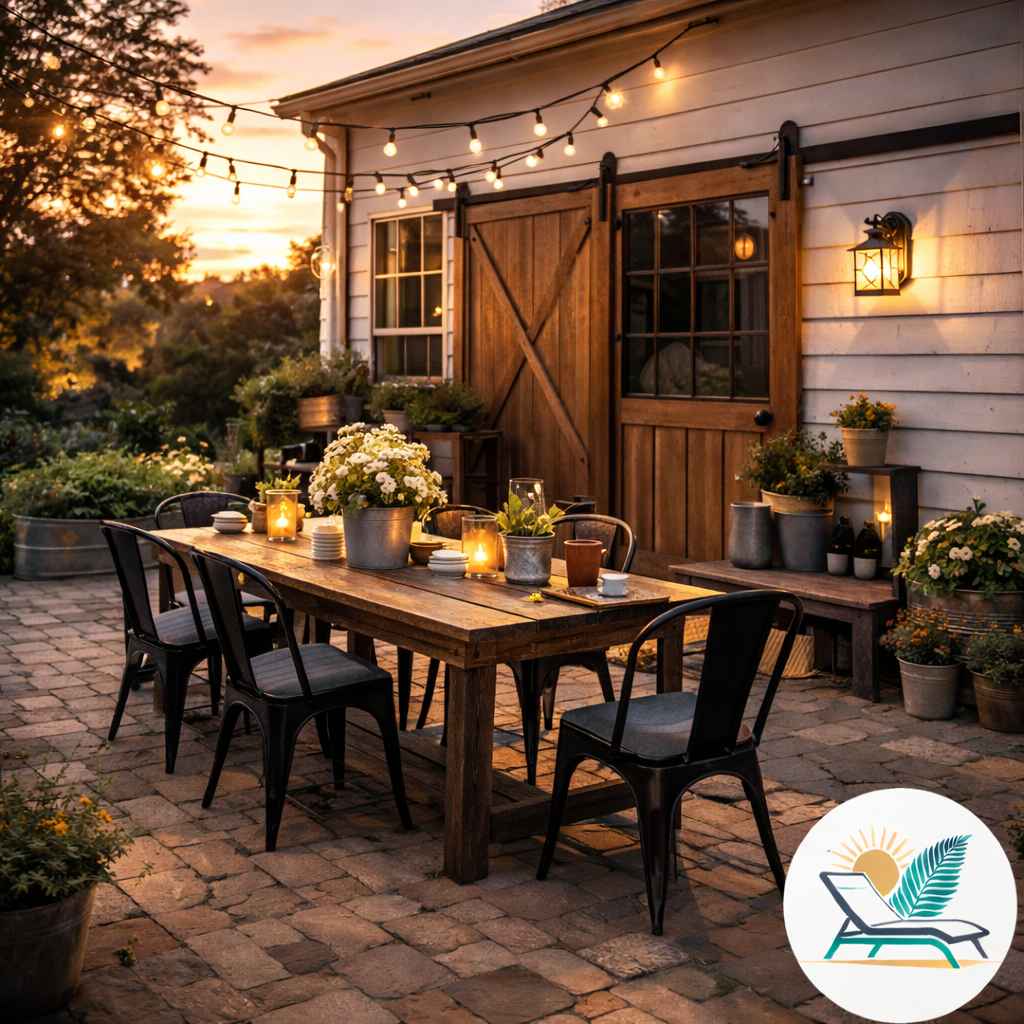


A farmhouse patio goes wrong fast when the materials fight each other. Wood grays unevenly, black metal overheats, and the “rustic” look turns into random leftovers. Then you’re stuck replacing boards, sanding splinters, and apologizing for wobbly chairs every time guests sit down.
Farmhouse patio ideas only work when the wood and metal have a clear job. One surface takes wear. One finish hides weather. One layout keeps traffic from grinding grit into every seam. The decision isn’t “rustic or modern.” It’s whether your patio feels settled—or always half-finished.
Choose the wood tone first, then match metal to it
Farmhouse patio ideas start with wood because wood dominates temperature, texture, and visual weight. Pick a tone you can live with in three seasons, not just the day you install it. Warm cedar can read orange under afternoon sun. Gray-stained pine can look flat on cloudy days. Reclaimed boards add soul, but the variation can swallow everything else if you don’t control it.
The constraint is availability. The exact “perfect” reclaimed tone may not be repeatable when you need a replacement board later. If you can’t source it twice, you’re gambling.
A common failure mode is mixing two wood tones plus two metal finishes because each piece looked good alone. Together, it turns busy and cheap.
The decision lever is simple: commit to one dominant wood tone across the biggest surfaces (decking, table, or bench). Then choose one metal finish that either disappears (matte black) or echoes the wood warmth (oil-rubbed bronze). Keep the second metal, if any, to hardware only.
Use metal where it earns its keep, not as decoration
Metal belongs in farmhouse patio ideas when it carries load, resists rot, or tightens structure. Steel table legs, iron brackets, and metal planters aren’t “style.” They’re function that happens to look good. Put metal where wood fails: high-stress joints, ground contact, thin spans, and constant motion like chair rails.
The constraint is heat and glare. Dark metal in direct sun becomes untouchable. Shiny metal looks industrial, not farmhouse.
The failure mode is buying thin, hollow metal frames that flex. They squeak, they rack, and eventually the fasteners tear out of the wood top.
Your decision lever is thickness and connection. Look for legs with cross-bracing or stretcher bars, and avoid decorative scrollwork unless it’s welded cleanly. If the metal is structural, it should feel calm and confident—no wobble, no drama.
Design the floor for grit, water, and chair drag
Flooring is where farmhouse patio ideas either survive daily life or fall apart in a year. Farmhouse style invites boots, pets, and outdoor cooking. That means grit. Grit scratches soft wood finishes and works into seams. Water finds every low spot and punishes rushed installation.
The constraint is slope and drainage. If the patio sits flat, puddles will win. If it’s too steep, furniture slides and the space feels uneasy.
A classic failure mode is choosing a beautiful surface and forgetting chair drag. Metal chair feet gouge. Wood chair feet wear unevenly. Plastic glides trap grit and grind it like sandpaper.
The decision lever is protective friction. Use outdoor rugs only where they can dry. Choose furniture feet that glide without trapping grit, and add discreet pads that can be replaced. If you’re using pavers, pick a jointing sand that resists washout and weeds. The floor doesn’t need to be precious. It needs to be reliable.
Build seating around one “anchor” piece, not a collection
Farmhouse patio ideas look intentional when seating feels built-in, even if it isn’t. Start with a single anchor: a long bench, a chunky dining table, or a deep-cushion loveseat with a wood frame. That one piece sets scale, height, and comfort expectations.
The constraint is proportion. Farmhouse pieces are often heavier and taller. On small patios, oversized furniture turns movement into a side-step shuffle.
Failure mode: collecting charming pieces over time that don’t share seat height. People feel awkward—knees too high, elbows too low—and they don’t stay long.
The decision lever is standardizing the sit. Choose a target seat height and stick to it. Then repeat one material cue across the set: the same wood slat style, the same black metal leg profile, or the same hardware finish. Farmhouse patio ideas should feel like a set that grew together, not a storage sale.
Create a weatherproof “soft zone” without fake rustic clutter
Textiles are where farmhouse patio ideas can quickly slip into staged décor. You want softness—cushions, throws, maybe a table runner—but not props that don’t survive real use. Outdoor fabric has improved, yet it still needs smart placement.
The constraint is moisture cycles. If your patio stays shaded, cushions can stay damp long enough to smell. If it’s full sun, lighter fabrics stain and fade faster.
A failure mode is using indoor pillows outside “just for now.” They swell, mildew, and start shedding fibers that cling to everything.
The decision lever is removable softness. Use fewer, better cushions with washable covers. Keep the palette narrow: creams, muted stripes, denim blues, or canvas tones that belong with wood grain. Let the wood and metal carry the rustic message; the textiles should signal comfort, not theme.
Light it like a working space, not a wedding set
Farmhouse patio ideas benefit from lighting that feels practical. You’re eating, cleaning up, walking drinks across uneven boards. Soft glow matters, but so does seeing what you’re doing. Layered lighting keeps it human: one overhead line, one wall or post light, and one low glow near steps.
The constraint is power and weather rating. Extension cords across walking paths are an accident waiting to happen.
Failure mode: string lights only. They photograph well, but they leave corners dark, steps risky, and faces shadowed at the table.
The decision lever is task brightness in the right places. Put brighter light where hands work—grill, table, entry. Keep the decorative glow for perimeter and mood. Warm color temperature reads farmhouse; cool white reads garage.
Make a metal-and-wood privacy edge that doesn’t feel boxed in
Boundaries matter in farmhouse patio ideas because rustic materials carry visual weight. If you add too much fencing, the patio feels like a crate. If you add none, the space never settles. The solution is a partial edge: a low wall, a planter line, a slatted screen, or a trellis with metal brackets.
The constraint is wind. Tall screens can act like sails and loosen posts over time.
Failure mode: building a full-height screen with thin slats that warp, leaving gaps and twisty shadows. It looks tired fast.
The decision lever is height and openness. Aim for an edge that blocks the harshest view but keeps the sky. Combine vertical wood slats with a black metal frame for stiffness. It reads farmhouse, it lasts longer, and it keeps the patio from feeling like a hallway.
Add one honest “work surface” for real farmhouse utility
A farmhouse patio isn’t only for sitting. It needs a surface where things land: serving trays, garden tools, potting mess, kids’ crafts. Farmhouse patio ideas feel believable when there’s a spot designed for that chaos.
The constraint is space. On tight patios, extra tables become obstacles.
Failure mode: using the dining table as the only surface. It stays cluttered, so it’s never ready for a meal. The patio looks perpetually mid-task.
The decision lever is a narrow console or bar-height counter against a wall. Wood top, metal brackets, durable finish. It keeps the mess contained and keeps the main table clean. The patio starts working like a room, not a staging area.
Control rust and patina so it looks intentional, not neglected
Rust can be beautiful in farmhouse patio ideas, but only when it’s controlled. Unsealed rust stains concrete and pavers. It bleeds onto cushions. It marks hands and clothing. Patina should feel like character, not decay.
The constraint is climate. Coastal air accelerates corrosion. Wet winters keep metal damp for longer cycles.
Failure mode: mixing raw steel pieces with painted steel, then watching the raw parts streak while the painted parts chip. The mismatch reads accidental.
The decision lever is choosing where patina is allowed. Let planters and accent pieces age. Keep structural items sealed or powder-coated. If you want the rust look, use finishes designed for it, and isolate them from surfaces that stain easily. Farmhouse patio ideas should age gracefully, not messily.
Scenario: a weekend dinner patio that stays calm under pressure
Picture a family in a rented farmhouse-style home, early fall, short daylight. They want a patio that handles kids running through, a grill session, and eight people at the table. The budget is tight, the deck is older, and the wind picks up at night.
They choose farmhouse patio ideas that start with one anchor table: thick wood top, black metal base with a stretcher bar. They keep the wood tone consistent by staining two benches to match, then add only one more metal finish in the lantern-style wall lights.
Friction point one: the first rug choice holds moisture and smells after two rains. They swap to a smaller, breathable rug placed only under the table edge, not across the walking line.
Friction point two: the cheap chairs wobble and scratch the deck. They add replaceable glides and re-tighten the frames, then stop buying flimsy metal.
The decision lever that fixes the whole space is layout discipline. A clear walking lane from door to grill, no furniture pinch points, and lighting that actually hits the table. Suddenly the patio feels “done,” even though it’s mostly wood, metal, and a few smart choices.
Conclusion
Farmhouse patio ideas aren’t about piling rustic objects onto an outdoor space. They’re about picking materials that can take friction without looking battered, then designing the layout so daily use doesn’t slowly wreck the finish. Start with the dominant wood tone and commit to it. Choose metal where it adds strength and stability, not because it looks trendy. Put your best effort into the floor, because grit and water will test every shortcut.
A good first move is to define one anchor piece and one metal finish, then remove anything that doesn’t support those decisions. The failure to avoid is mixing “charming” items that don’t share scale, seat height, or finish logic. When farmhouse patio ideas are working, the patio feels calm: you can cook, sit, clean up, and host without the space fighting back. That’s what “good” looks like—simple materials, disciplined choices, and surfaces that age on purpose.
How do farmhouse patio ideas stay rustic without looking messy?
Keep one dominant wood tone and one metal finish. Limit décor pieces, prioritize sturdy furniture, and leave visual breathing room so the materials carry the style.
What wood holds up best for farmhouse patio ideas outdoors?
Cedar, redwood, and pressure-treated lumber last well when sealed. The key is consistent maintenance and avoiding trapped moisture around joints and furniture legs.
Do farmhouse patio ideas work on small patios?
Yes, if you scale down the anchor piece and keep a clear walking lane. Choose a bench instead of bulky chairs and use vertical planters for presence.
Which metal finish fits farmhouse patio ideas most naturally?
Matte black and oil-rubbed bronze read classic and hide wear. Avoid shiny chrome; it looks modern and shows fingerprints, scratches, and water spots.
How can farmhouse patio ideas handle rain and puddles?
Ensure the surface drains, seal wood, and use breathable rugs. Keep cushions on quick-dry foam and store textiles when wet weather lingers.
What’s the easiest upgrade for farmhouse patio ideas on a budget?
Swap hardware and lighting to a consistent metal finish, then add one anchor piece like a wood-and-metal table. Consistency looks expensive.
How do I prevent rust stains with farmhouse patio ideas?
Use sealed or powder-coated metal for structural pieces. Place raw metal accents on trays or paver-safe pads so runoff doesn’t stain concrete.
Can farmhouse patio ideas include color without losing the rustic feel?
Use muted tones like denim blue, clay, or olive in textiles. Keep wood and metal neutral so color reads as comfort, not theme décor.
What lighting makes farmhouse patio ideas feel warm at night?
Warm-toned bulbs, lantern-style wall lights, and a modest string light run. Add a low light near steps so the patio stays safe and usable.
How should I mix reclaimed wood into farmhouse patio ideas?
Use it on one main surface like a bench or tabletop, then keep other wood surfaces simple. Too much variation turns the patio visually noisy.
What’s a common mistake that ruins farmhouse patio ideas quickly?
Buying flimsy metal frames that wobble and using indoor cushions outside. Both fail fast and make the space feel temporary and worn.
How do I make farmhouse patio ideas feel “finished”?
Define edges with planters or a partial screen, set a clear furniture layout, and commit to one wood tone and one metal finish across key pieces.