

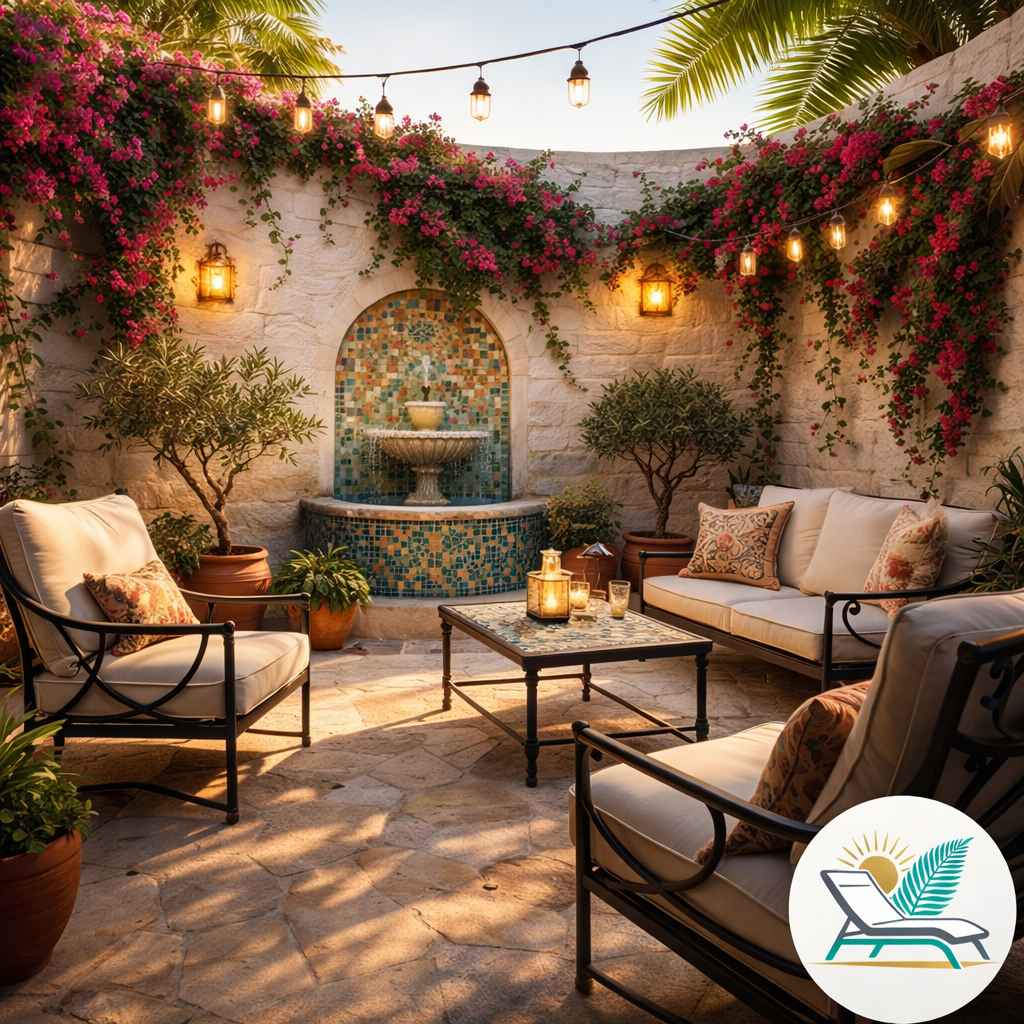


A courtyard can look finished and still feel wrong. Sound ricochets off hard walls. Sun lands exactly where you need shade. A “pretty” seating set becomes a storage problem after one windy week. The cost isn’t just money—it’s the daily irritation of a space you avoid, plus the slow creep of maintenance you didn’t plan for. Courtyard patio ideas only work when privacy, drainage, heat, and sightlines are handled as the first decisions, not the last. Your real choice is simple: build a courtyard you actually use on ordinary evenings, or keep owning an outdoor room that behaves like a hallway.
Sightlines First, Then Seating
Courtyard patio ideas often fail because the seating gets placed before the privacy problem is solved. In a courtyard, privacy is not just “higher walls.” It’s where eyes land from upstairs windows, neighboring balconies, side gates, and even the kitchen door you walk past ten times a day.
A practical constraint shows up fast: you don’t always control the wall height, and adding tall screens can trigger HOA rules or block light you need indoors. A common failure mode is pushing seating to the center for symmetry—then realizing the center is also the exposed zone, the windiest pocket, and the place where conversations bounce off surfaces and feel louder than they should.
The decision lever is the primary sightline. Pick the single most intrusive angle and break it. That can be a slim vertical-slat screen aligned to the view, a tall planter cluster that creates a “soft corner,” or a pergola beam that interrupts the line of sight without turning the courtyard into a cave. Once the sightline is controlled, seating becomes obvious: tuck the main chair line parallel to the most solid wall so people feel backed, not displayed. Courtyard patio ideas that feel private usually start with “where can I sit without feeling watched,” not “what furniture looks good.”
Materials That Quiet the Courtyard
Hard courtyards amplify everything: footsteps, chair scrapes, a kid’s laugh that suddenly feels too sharp. If you want a retreat, you need surfaces that absorb some sound and don’t flash heat back at you.
The constraint is durability. Soft surfaces outdoors can get ugly fast if your courtyard holds moisture or gets leaf drop. The failure mode is selecting slick tile because it looks clean—then discovering glare in summer, slippery algae in shoulder seasons, and noise that makes the space feel like a small lobby.
The decision lever is mixing textures by function. Use stone or pavers for circulation paths and dining zones, then introduce quiet where people linger: an outdoor rug with a tight weave under the seating, wood composite decking inserts, or even gravel bands contained by edging so it stays in place. Courtyard patio ideas that read calm usually have at least one “sound-damping” layer. Pair that with felt pads on chairs and a table base that doesn’t ring when you set a glass down. Small choices, big effect.
Shade That Doesn’t Suffocate the Space
Courtyard shade is tricky because the walls already create shadow patterns. Add the wrong shade and the courtyard feels dim at noon and blistering at 4 p.m. Add nothing and you’ll use it only in the one hour when the sun behaves.
The constraint is geometry: a small footprint limits big umbrellas, and a cantilever base can steal the very floor area you need. The failure mode is buying a large umbrella for coverage, then fighting it every time the wind tunnels through the opening and the umbrella becomes a lever on its own stand.
The decision lever is directional shade. Track where the sun hits during your actual use time—late lunch, early evening, weekend mornings—and shade only the “comfort rectangle” where people sit. A slim wall-mounted shade sail, a pergola with adjustable louvers, or even a trellis with vine cover can aim shade without eating the whole sky. Courtyard patio ideas that feel airy keep overhead elements light in color and open in structure so you get shade without gloom.
Lighting That Feels Private, Not Stadium-Bright
Courtyard lighting is where good intentions get loud. Bright fixtures make the space visible to neighbors and flatten every texture. Too little light and you stop using the courtyard once the sun drops.
The constraint is wiring. Many courtyards lack easy access to power, and running new lines can be expensive or restricted. The failure mode is relying on one overhead light, which creates harsh shadows and turns faces into underlit shapes—exactly the opposite of a retreat vibe.
The decision lever is layered, low-level light. Put a warm source near ankles and knees: path lights, wall washers, lantern-style fixtures on a ledge. Add one soft overhead element only where needed—over a dining table, not over the whole courtyard. Courtyard patio ideas that feel intimate use light to define zones and edges, not to flood the center. If you’re using solar, choose fewer high-quality units rather than scattering many weak ones that look messy and fail in winter.
Greenery That Adds Privacy Without Becoming a Chore
Plants are the fastest privacy upgrade, but they’re also the quickest way to add ongoing work. In courtyards, reflected heat off walls can cook containers, and limited airflow can invite mildew.
The constraint is irrigation. Hand-watering containers in summer becomes a daily obligation. The failure mode is buying lush, thirsty plants for the “retreat” look, then watching them struggle because the courtyard turns into a heat box in late afternoon.
The decision lever is choosing plants by microclimate, not by photo. If the courtyard is hot and bright, use Mediterranean-style choices that tolerate reflection and pot life. If it’s shaded and damp, lean toward evergreen structure and fewer species. Add one vertical element—climbing vines on a trellis or an espalier—so privacy rises without stealing floor area. Courtyard patio ideas that stay beautiful have a plant plan that matches your willingness to maintain, not your wish to become a gardener overnight.
Water and Drainage That You Don’t Notice
Nothing ruins a courtyard retreat like puddles at the door, slippery patches near seating, or damp corners that smell stale. Courtyards are enclosed; they reveal drainage mistakes quickly.
The constraint is slope. You can’t always regrade easily, and drains may already be placed in inconvenient spots. The failure mode is laying new pavers or tile without confirming where water will go, then discovering runoff collects along the wall and seeps into joints.
The decision lever is routing water before decoration. Identify the low point after rain. If you’re resurfacing, set a subtle slope away from the home and toward drainage, and avoid materials that trap water in textured grooves. If you’re not resurfacing, use furniture and planters to keep the worst wet zones clear, and add permeable gravel strips where water tends to linger. Courtyard patio ideas feel effortless when the courtyard dries quickly and your shoes don’t tell you where the problems are.
Seating Scale That Matches the Courtyard, Not the Catalog
Courtyards punish oversized furniture. Deep sectionals look inviting online but can swallow a small footprint and force awkward circulation. Then the courtyard becomes a storage yard for cushions and side tables.
The constraint is clearance. You need walking room, door swing space, and service access. The failure mode is buying a full set—sofa, two chairs, table—then realizing you’ve created a maze where nobody can move without bumping knees.
The decision lever is a “use path” you protect. Mark the route you take from door to gate, and keep it clear with at least comfortable shoulder width. Choose slimmer profiles, armless chairs, or a built-in bench along a wall so you reclaim the center. Courtyard patio ideas that work long-term typically prioritize two great seats and one flexible surface over a full matching set that looks complete but functions poorly.
A Fire Feature That Respects the Walls
Fire can turn a courtyard into a winter room, but it can also damage surfaces, trap smoke, or trigger safety issues. In an enclosed space, heat and airflow behave differently.
The constraint is clearance and fuel type. Gas lines and permitted installs may not be feasible; wood smoke can be unpleasant in tight courtyards. The failure mode is placing a fire bowl too close to a wall, then scorching paint, staining stone, or creating a smoke pocket that chases everyone indoors.
The decision lever is placement and ventilation. Keep fire features centered enough to protect walls, but anchored so people aren’t circling it like a campfire in a corridor. If the courtyard is narrow, consider a linear gas fire table or a wall-mounted electric unit designed for outdoor-rated use, depending on local rules. Courtyard patio ideas with fire succeed when the feature supports the seating arrangement instead of dictating it.
Privacy Without Building a Fortress
The point of a courtyard is enclosure, but turning it into a fortress backfires. Overbuilt screens block breezes, reduce light indoors, and make the courtyard feel smaller.
The constraint is light spill and airflow. You still want the courtyard to breathe. The failure mode is stacking multiple privacy layers—tall screens plus dense hedge plus heavy pergola—then wondering why the courtyard feels claustrophobic and damp.
The decision lever is selective opacity. Use privacy where it matters and openness where it doesn’t. A half-height screen with planting above it can stop direct views while preserving air. A lattice panel can blur sightlines without going solid. Courtyard patio ideas that feel expensive usually rely on smart partial screening, not walling everything off.
One Scenario That Shows What Changes Everything
Picture a townhouse courtyard behind a glass back door. Two adults want a nightly ten-minute sit after work, but they avoid the space because the neighbor’s upstairs window looks straight into the seating area, and the courtyard stays hot until late. They bought a deep loveseat first; it sits centered, so they feel exposed. They add an umbrella; it wobbles in wind and blocks the door path.
Two friction points show up, and they’re common. One: they tried to solve privacy with furniture placement, but sightlines don’t care about furniture. Two: they solved heat with shade, but ignored wind tunneling between walls.
The fix isn’t expensive; it’s sequenced. They place a vertical-slat screen aligned to the upstairs view, add a slim bench along the solid wall to pull seating out of the center, and install a light pergola panel over only the seating zone, leaving the rest open for airflow. Courtyard patio ideas start working when you stop trying to “decorate” your way out of a geometry problem.
Conclusion
Courtyard patio ideas don’t earn their keep by looking finished; they earn it by feeling protected, usable, and low-drama on regular days. The first move is controlling the primary sightline, because privacy sets the entire layout. If you skip that, you’ll keep rearranging furniture and blaming the courtyard for feeling awkward. The failure to avoid is overbuilding—too much screen, too much shade, too many pieces—until the courtyard turns dark, tight, and harder to maintain than the interior.
“Good” looks like this: you can step out barefoot, sit down without feeling observed, and stay comfortable for at least twenty minutes in the seasons you care about. Start with one zone done right—seating, shade, and light layered at human height—then add materials and planting that reduce noise and heat without increasing your weekly workload. A courtyard retreat isn’t a style. It’s a set of decisions that remove friction.
How do I make a courtyard feel more private without raising walls?
Use courtyard patio ideas like vertical slat panels, tall planters, or a light trellis to break key sightlines while keeping airflow and daylight.
What flooring works best for a small courtyard patio?
Courtyard patio ideas favor textured pavers or stone for grip and heat control; avoid glossy tile that glares, gets slippery, and amplifies noise.
How can I add shade in a courtyard without making it dark?
Aim shade only over the seating zone using a sail, louvered pergola, or trellis; courtyard patio ideas work when overhead coverage stays visually light.
What’s the easiest way to improve courtyard acoustics?
Add an outdoor rug, soft seating, and a few plants to absorb bounce; courtyard patio ideas fail when everything is hard, flat, and reflective.
How should I place seating in a courtyard for comfort?
Back seating to the most solid wall and keep a clear walk path; courtyard patio ideas improve when the center isn’t the exposed, windy zone.
What lighting makes a courtyard feel like a retreat?
Layer low-level lights—path, wall wash, lanterns—then one soft overhead over dining; courtyard patio ideas avoid bright single fixtures that flatten ambiance.
Which plants survive hot courtyard walls and containers?
Choose drought-tolerant, heat-hardy plants for reflective courtyards and group pots for shared moisture; courtyard patio ideas collapse when watering becomes daily.
How do I prevent puddles and damp corners in a courtyard?
Confirm drainage paths, use permeable strips where water collects, and avoid grooves that hold moisture; courtyard patio ideas feel effortless when drying is fast.
Are fire pits safe in enclosed courtyard spaces?
They can be, but clearance and ventilation matter; courtyard patio ideas usually favor gas or approved electric options in tight layouts to reduce smoke issues.
How do I keep a courtyard from feeling cramped?
Use fewer, slimmer pieces, built-in benches, and selective screening; courtyard patio ideas feel spacious when the center stays open and circulation is easy.
What’s one upgrade that changes a courtyard the most?
Breaking the primary sightline with one well-placed screen or tall planter cluster; courtyard patio ideas become usable once you stop feeling watched.
How do I choose a courtyard style that won’t date quickly?
Prioritize durable neutrals, layered textures, and adaptable lighting; courtyard patio ideas stay current when the layout works first and decor stays secondary.